
The Next Generation of Immuno-Oncology
Science
Uncovering and Exploiting novel antigens
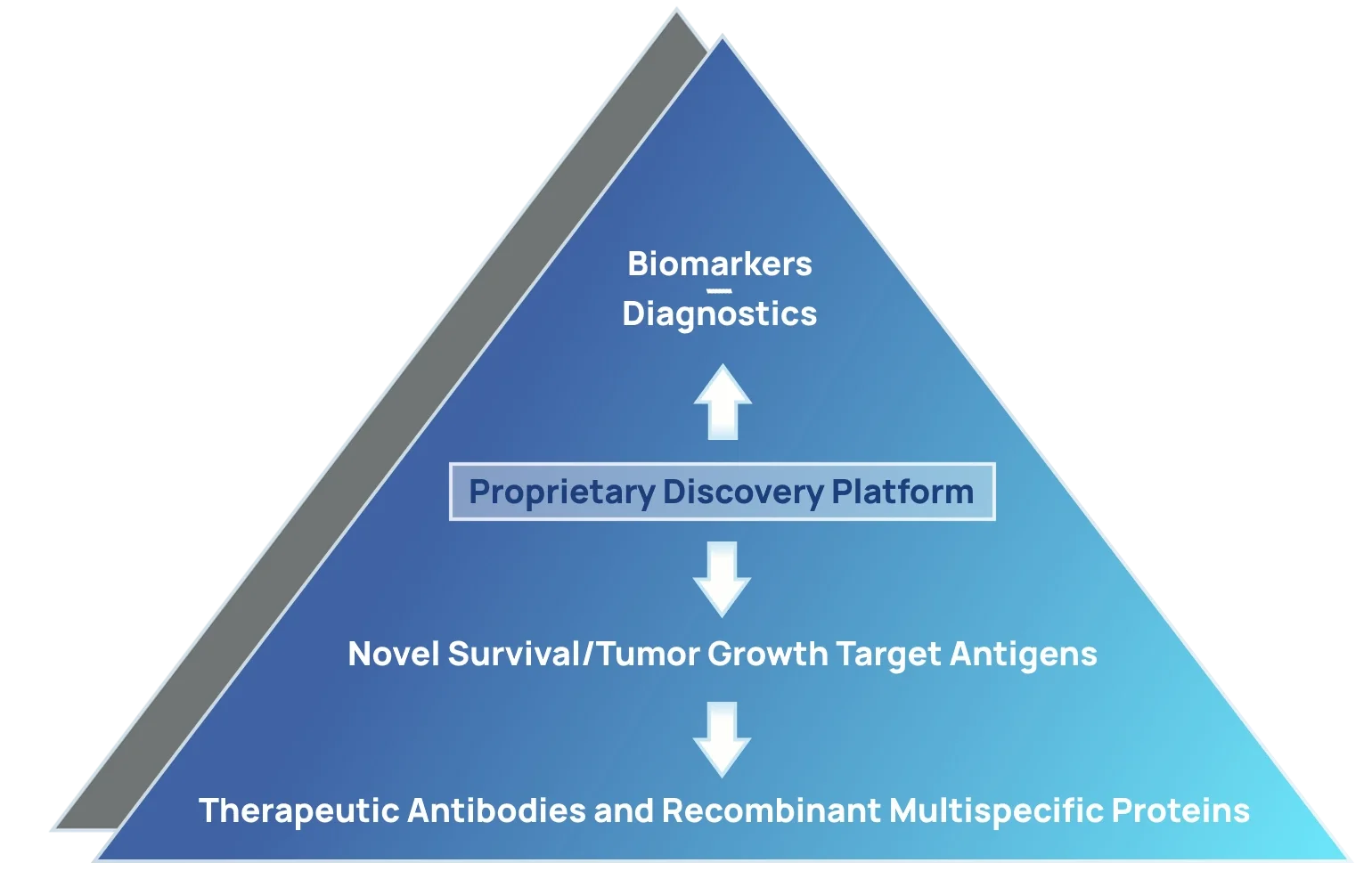
Synergy IMT has discovered multiple tumor cell antigens, with protumor survival activity on a broad range of solid cancer types, that do not appear to be expressed on normal cells. These proteins, which are restricted to intracellular sites in normal cells, are localized to the surface of tumor cells, making the tumor cell susceptible to novel immunotherapeutics. A subset of these tumor antigens appears to possess a survival role and may be designated survival tumor antigens (sTA). This constitutes a proprietary platform from which Synergy IMT is developing monospecific and multi- functional highly efficacious antibodies, and recombinant protein-based therapeutics. Synergy IMT generates panels of tumor antigen specific antibodies from single B cells and hybridomas to identify first-in-class antibodies possessing ideal drug-like properties.
Targeting a tumor cell’s Achilles’ heel
One novel target antigen appears to be localized at the leading and trailing edge, the “foot” of a migrating tumor cell (figure). A monospecific antibody targeting this tumor antigen significantly inhibits tumor growth in animal studies. This antibody is engineered as not to support an immune cell response, thus binding the target sTA appears to suffice for tumor growth inhibition. Targeting the leading or trailing edge of a tumor cell can focus treatment to tumor cells that are actively involved in invasion and metastasis, the most lethal aspects of cancer.
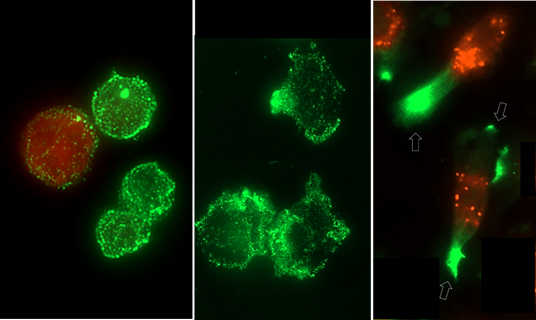
A tumor antigen, with a predominantly diffuse punctate pattern on non-adherent tumor cells (left panel), concentrates at cell edges with spreading (center panel; arrows). The tumor antigen distribution is consistent with the leading and trailing edge, or” foot” of tumor cells with a migratory morphology (right panel; arrows).
Left and center panel; a non-adherent and adherent colon tumor cell line was stained with a Synergy IMT antibody specific for the tumor antigen(green). Red stain (propidium iodide) indicates a large non-viable cell.
Right panel; a breast tumor cell line, was stained with a cell permeant mitochondrial stain (red), PFA fixed and stained with Synergy IMT antibody specific for a novel tumor antigen (green).
Demonstrating their promise
A Foundation for Success
New tumor target antigens are desperately needed to address tumor heterogeneity, drug resistance, and the pro-tumor microenvironment. Synergy IMT has identified tumor antigens expressed on a wide range of different solid tumor types. Two or more of these are expressed on all tumor types examined. Drug candidates targeting these antigens demonstrate significant tumor growth inhibition in efficacy studies and safety in a multidose tolerability study. Administration of a single monospecific antibody, that does not recruit immune cells via Fc receptor engagement, suffices for significant tumor growth inhibition. Biomarkers have been identified for therapeutics targeting these tumor antigens. These tumor antigen properties ensure that therapeutic development is founded on targets that dictate the most promising clinical trajectory.
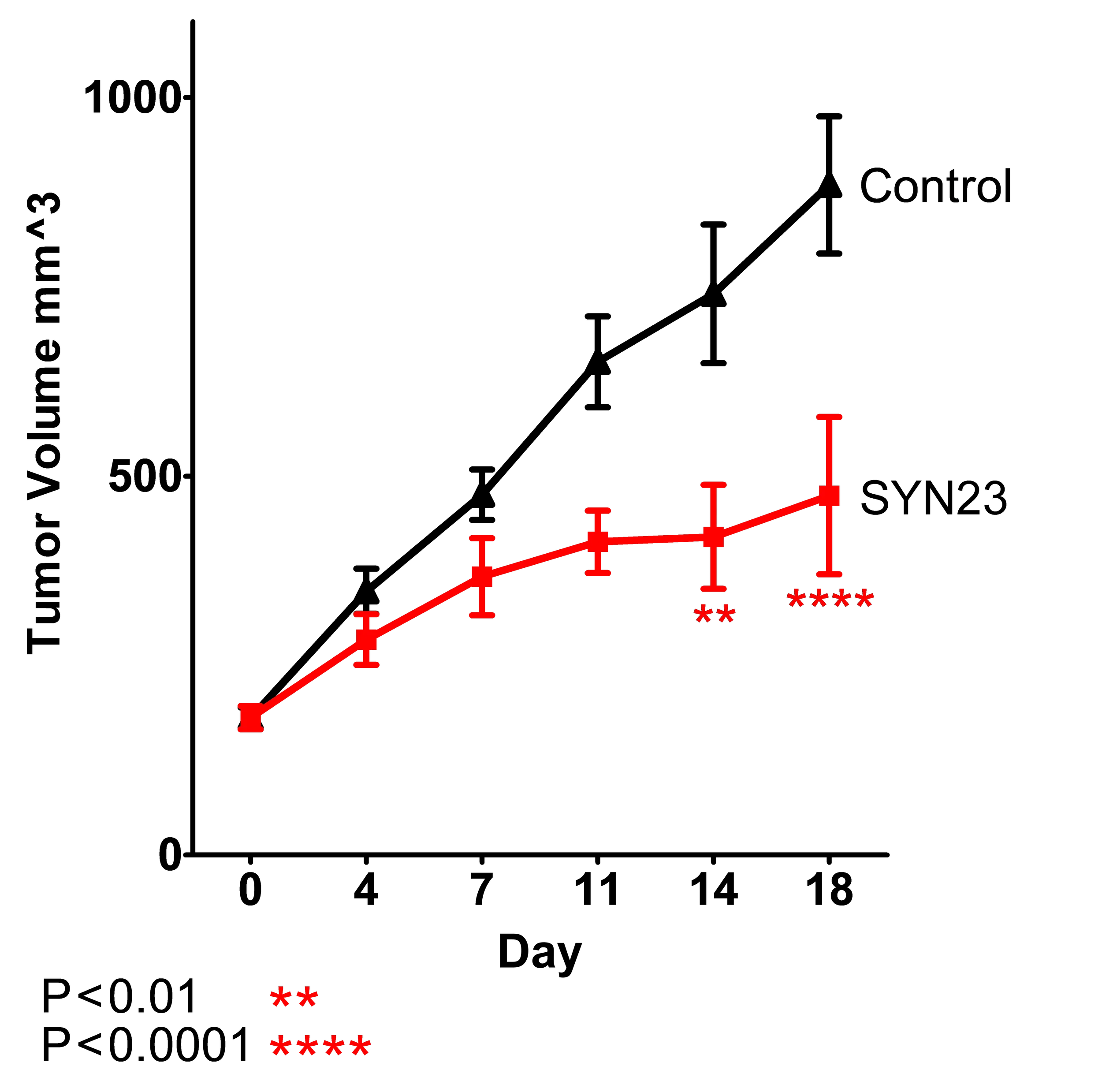
Monoclonal Antibody
Colon Tumor Xenograft Study
Dosed IV @10mg/kg

Antibody Drug Conjugate (MMAE)
Colon Tumor Xenograft study
Dosed IV @4mg/kg
Biomarkers
Synergy IMT’s antibodies identify their tumor-associated antigens in cancer patient blood, i.e. a liquid biopsy; a non-invasive, dynamic method to monitor the patient’s response to therapy. These biomarkers may enable an earlier diagnosis, improve patient stratification for clinical trials, and help guide treatment decisions, ultimately leading to better patient outcomes.
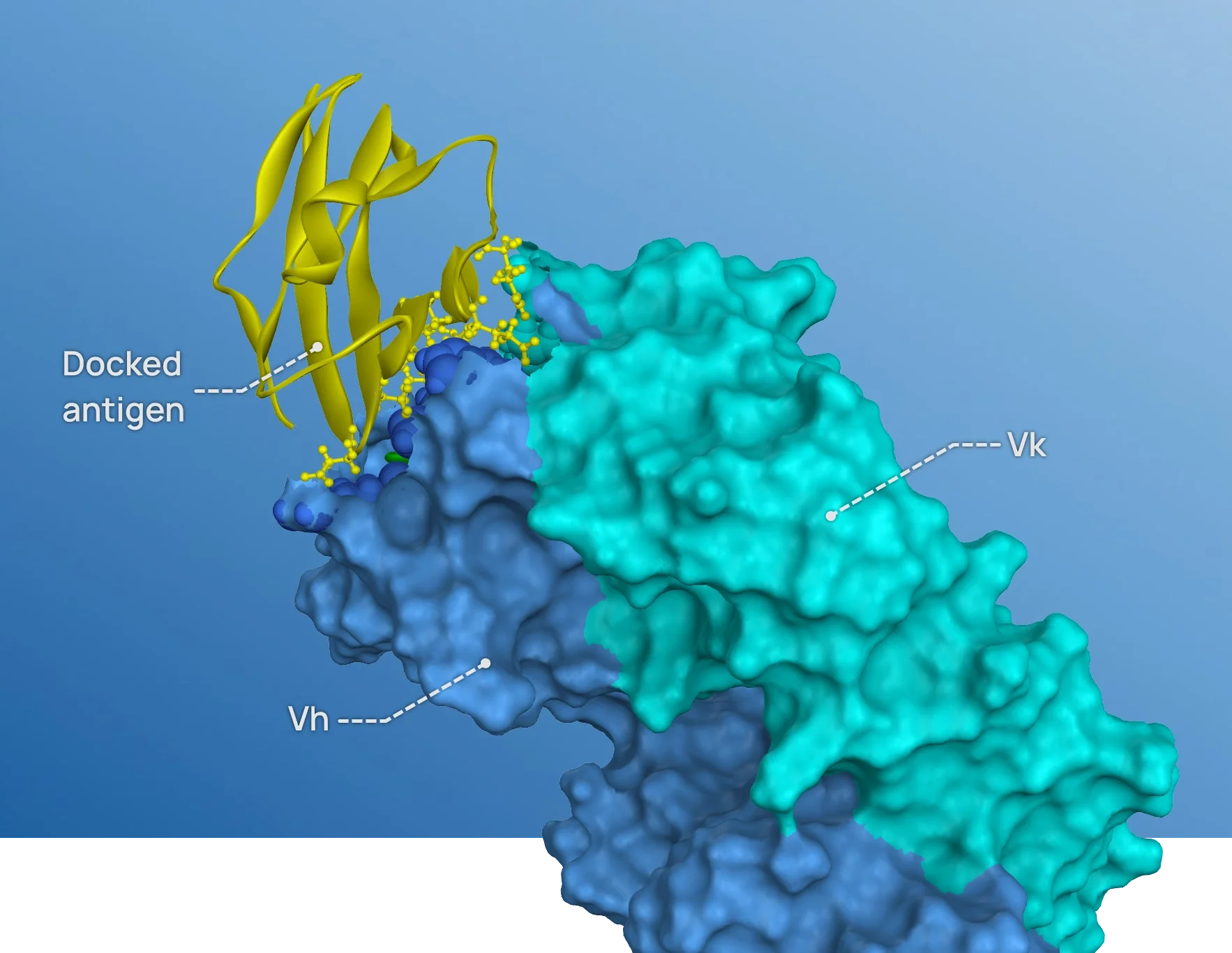
AI driven docking of Synergy IMT PD-L1 antibody showing a subset of antigen H-bond contacts.
Engineering Precision; A Multi-Modal Therapeutic Engine
The Therapeutic Engine
AI is integrated throughout discovery and development. It has accelerated the identification of Synergy IMT’s platform tumor targets, to design and optimize therapeutic molecular architecture and assist in epitope mapping. Modular therapeutic designs with different functional moieties are engineered that include antibody, ligand and recombinant protein domains. Comparative studies are conducted to identify and focus on candidates with the greatest potency and promise of inducing a safe and durable antitumor response.
Modality Suite: Monospecific Antibodies, ADCs and Recombinant Proteins
Monospecific antibodies, antibody drug conjugates (ADCs) and recombinant protein candidates, that target these tumor antigens, sTA, and/or their activity, demonstrate very significant tumor growth inhibition in animal tumor models.
Bi- and Tri-specific Antibodies and TCEs
Bispecific and tri-specific antibodies, including T cell receptor engagers (TCEs), T cell co-stimulators and immune checkpoint inhibitors, have been created that target sTA and potently kill a broad range of tumor cell types.
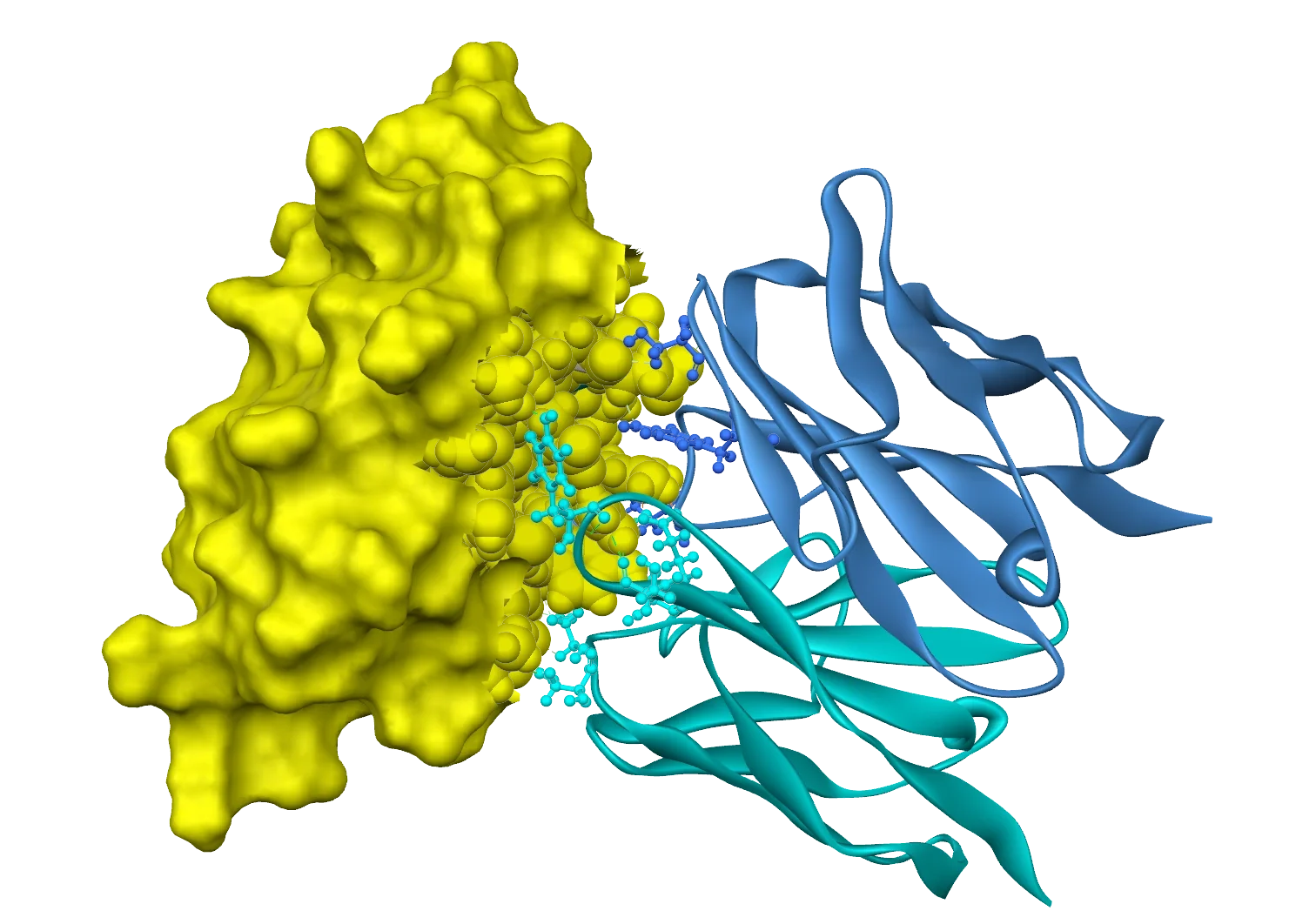
Docking of Synergy IMT B7H3 specific antibody showing a subset of CDR H-bond contacts.
Clinical Momentum and Partnership Focus
Several drug candidates are well tolerated in a multi-dose toxicity study, supporting tumor-restricted antigen expression. Multiple patents have been filed that cover these candidates and their novel targets.
Synergy IMT is focused on progressing an initial candidate into clinical studies and forming collaborations around other candidates.